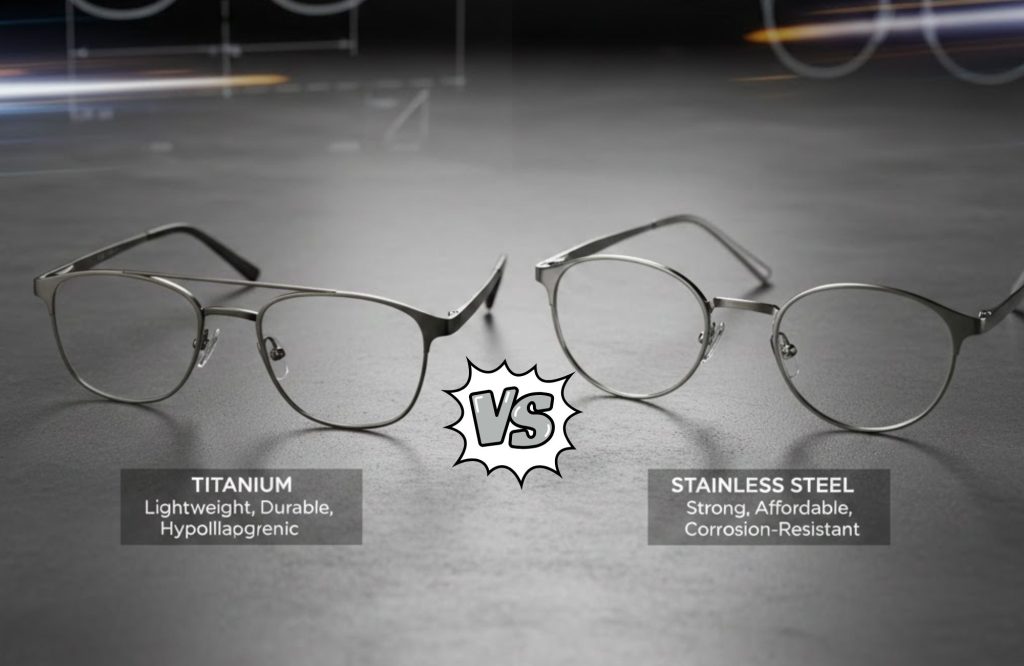
Choosing between titanium vs stainless steel eyeglass frames is one of the most common decisions people face when shopping for metal frames. Both materials are widely used across the eyewear industry, both are considered durable options, and both appear in stylish eyewear designed for everyday wear. However, the differences between these frame materials become more noticeable when comfort, skin sensitivity, lens weight, and long-term wear are considered. Understanding how these eyeglass frame materials perform in real-world conditions helps you choose a frame that fits your lifestyle, prescription lenses, and personal style.
At Speksy, we help customers across the United States compare titanium frames and stainless steel frames with clarity instead of guesswork. Every pair of glasses frames is 100 percent authentic, paired with premium prescription lenses, and supported by licensed opticians who help match material, proper fit, and lenses to how you actually wear your glasses.
What Are Titanium Eyeglass Frames?
Titanium eyeglass frames are metal frames made from pure titanium or titanium alloy materials known for being extremely lightweight, corrosion-resistant, and comfortable for extended periods of wear. These frames are often chosen for their high resistance, strength-to-weight ratio, and hypoallergenic properties.
Titanium has become a staple in high-end eyewear because it combines lightweight comfort with excellent durability. Compared to other metal frames and certain plastic frames, titanium frames feel noticeably lighter on the face while maintaining structural integrity. This makes titanium eyeglasses a strong choice for people who wear glasses all day, use progressive lenses, or have stronger prescriptions that increase lens weight.
Key Properties of Titanium Frames
Titanium frames offer unique properties that directly affect comfort, durability, and long-term performance.
- Extremely lightweight comfort: Titanium glasses reduce pressure on nose pads and temple tips, making them ideal for all-day wear
- High durability: Titanium maintains its original shape and resists wear and tear
- Excellent corrosion resistance: Titanium withstands sweat, humidity, and extreme temperatures
- Hypoallergenic properties: Pure titanium frames are well-suited for sensitive skin and metal allergies
These benefits make titanium frames a popular choice for people who prioritize comfort, longevity, and minimal maintenance.
Pure Titanium vs. Titanium Alloy
Not all titanium frames are the same. Pure titanium frames offer the highest level of corrosion resistance and are least likely to trigger allergic reactions. Titanium alloy frames, including beta titanium, blend titanium with other materials to improve flexibility and reduce cost.
Beta titanium frames are extremely flexible and tend to return to their original shape after adjustments, making them suitable for active lifestyles. However, alloy frames may include other metals, which can matter for people with high skin acidity or known metal allergies.
What Are Stainless Steel Eyeglass Frames?
Stainless steel eyeglass frames are metal frames made from steel-based alloys designed to resist corrosion while providing strength and a sleek appearance. They are often chosen as a cost-effective alternative to titanium while still offering durability and style.
Stainless steel frames strike a balance between strength, light weight, and affordability. They are lighter than many other metal frames and easier to mold into thin, stylish designs. This makes stainless steel a popular choice for modern, minimalist eyewear and professional-looking frames.
Key Properties of Stainless Steel Frames
Stainless steel frames offer several practical advantages for everyday eyewear.
- Highly durable construction: Stainless steel holds up well under daily wear
- Lightweight compared to other metals: Comfortable for many users during extended periods
- Corrosion-resistant coatings: Protect against moisture and environmental exposure
- Slim and stylish appearance: Ideal for sleek, understated eyewear designs
For many people, stainless steel frames provide a comfortable and visually clean option for daily glasses.
How Stainless Steel Feels During Long Wear
Stainless steel frames typically feel comfortable and secure when properly fitted. However, because they are heavier than titanium, they may place more pressure on the nose and ears when paired with heavier prescription lenses. This difference becomes more noticeable during long workdays or extended screen use.
Titanium vs. Stainless Steel Eyeglass Frames: Side-by-Side Comparison
When comparing titanium vs stainless steel eyeglass frames, the most important differences involve weight, comfort, hypoallergenic properties, and long-term value. Titanium frames offer superior lightweight comfort, while stainless steel frames balance durability and affordability.
| Feature | Titanium Frames | Stainless Steel Frames |
|---|---|---|
| Weight | Extremely lightweight | Light, but heavier than titanium |
| Comfort for all-day wear | Excellent | Good for moderate wear |
| Durability | Highly durable and flexible | Strong but more rigid |
| Hypoallergenic risk | Very low with pure titanium | Varies depending on alloy |
| Corrosion resistance | Excellent | Good with protective coatings |
| Long-term value | Higher upfront, longer lifespan | Lower cost, solid lifespan |
If you are unsure how these differences affect your prescription lenses or comfort needs, an optician’s guidance can help determine the right frame material for your everyday wear.
Comfort, Fit, and Everyday Wear Differences
Comfort plays a major role in how satisfied people feel with their eyewear. Even small differences in weight, flexibility, and balance can affect how glasses feel after hours of wear.
Weight and Nose Bridge Pressure
Titanium frames distribute weight evenly across the face, reducing pressure on nose pads and behind the ears. This makes them ideal for people who wear glasses for extended periods or have heavier lenses. Stainless steel frames can still feel comfortable, but additional lens weight may increase pressure over time.
Temple Flexibility and Long-Term Adjustment
Titanium alloy and beta titanium frames are extremely flexible and tend to maintain their original shape after adjustments. Stainless steel frames are durable but less flexible, meaning repeated adjustments may eventually affect fit if not handled carefully.
Which Frame Material Is Better for Sensitive Skin or Allergies?
Titanium is widely considered one of the best frame materials for people with sensitive skin. Pure titanium frames are naturally hypoallergenic and resist corrosion caused by sweat and skin oils.
Nickel Allergies and Metal Frames
Some stainless steel frames contain nickel or other elements that can cause allergic reactions. While many stainless steel frames use protective coatings, people with known metal allergies often choose titanium frames to reduce irritation.
When Stainless Steel Can Still Be Safe
High-quality stainless steel frames with proper finishes and adjustable nose pads can still work well for many people. Choosing frames with minimal skin contact helps reduce irritation.
How Frame Material Affects Lenses and Prescriptions
Frame material influences how well glasses support prescription lenses, especially stronger prescriptions.
Strong Prescriptions and Lens Weight
Titanium frames handle heavier lenses better due to their strength and flexibility. This makes them a preferred option for high-index lenses and prescriptions that require extra structural support.
Progressive and Specialty Lenses
Progressive lenses benefit from frames that maintain alignment and balance. Titanium frames often provide better long-term stability, while stainless steel frames can still work well when properly fitted.
At Speksy, licensed opticians help match frame materials with prescription lenses to ensure a comfortable and secure fit.
Durability, Longevity, and Long-Term Value
Both titanium and stainless steel frames are durable, but their lifespan depends on wear habits and the environment.
Corrosion and Environmental Exposure
Titanium offers high resistance to corrosion, making it ideal for humid conditions, frequent outdoor use, and high skin acidity. Stainless steel resists corrosion as well, but relies more on protective coatings.
Repairs, Adjustments, and Lifespan
Titanium frames generally last longer with fewer adjustments due to their flexibility. Stainless steel frames are durable but may require more careful handling over time.
How to Choose Between Titanium and Stainless Steel Frames
The right frame material depends on how you wear your glasses.
- Choose titanium frames if you value lightweight comfort, sensitive skin safety, and all-day wear
- Choose stainless steel frames if you want a durable option with a sleek appearance at a lower cost
- Consider lens weight, prescription strength, and daily wear habits
- Think about long-term comfort and maintenance
Choosing the right frame material helps ensure lasting comfort and performance.
Conclusion
Choosing between titanium vs stainless steel eyeglass frames comes down to comfort, durability, and how you use your glasses. Titanium frames stand out for lightweight comfort, hypoallergenic properties, and long-term wear, while stainless steel frames offer durability and a stylish appearance at a more accessible price point. When paired with the right lenses and fit, both materials can provide reliable performance and style.
At Speksy, we make comparing titanium vs stainless steel eyeglass frames simple and stress-free. Every frame is 100% authentic, paired with premium prescription lenses, and supported by licensed opticians who help you choose the right material, fit, and lens options for your vision needs. Whether you’re deciding between lightweight titanium frames, durable stainless steel frames, or lens upgrades like progressives or transitions, our metal eyewear collection is curated for comfort, durability, and long-term value. If this is your first prescription order, use code SAVE10 at checkout.
FAQs
Is titanium or stainless steel better for glasses?
Titanium is generally better for lightweight comfort, sensitive skin, and extended wear. Stainless steel is a durable and cost-effective alternative that works well for everyday use. The best choice depends on prescription strength, wear time, and skin sensitivity.
What is the best material for eyeglass frames?
There is no single best material for everyone. Titanium offers lightweight comfort and hypoallergenic properties, while stainless steel provides strength and a sleek appearance. Acetate frames, memory metal frames, and other materials may suit different preferences.
What are the disadvantages of titanium glasses?
Titanium glasses often cost more than stainless steel frames. Some titanium alloy frames may feel more flexible than expected. However, many people find that the comfort and durability benefits outweigh these drawbacks.
What lasts longer, titanium or stainless steel?
Titanium frames typically last longer due to superior corrosion resistance and flexibility. Stainless steel frames are also durable but may require more maintenance over time, especially with frequent adjustments.
Posted in Eyeglasses Tips

