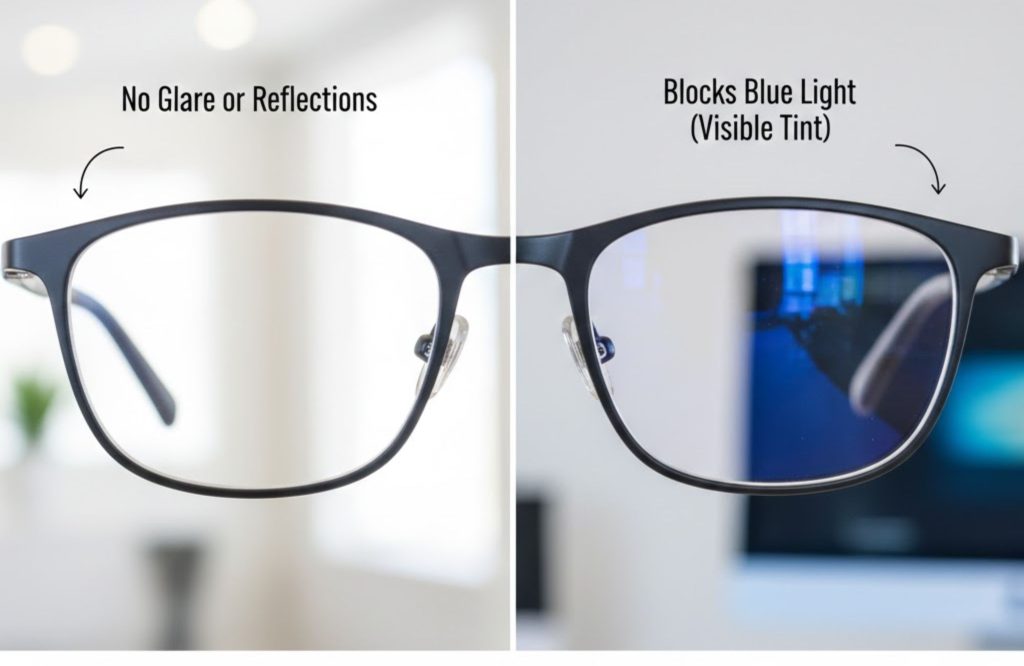
If you’ve ever compared anti-reflective lenses vs blue light, you’re not alone. Many people who wear glasses struggle to understand whether anti-glare glasses and blue light glasses serve the same purpose or solve different problems. In today’s digital age, where digital screens, mobile phones, and backlit digital gadgets dominate daily life, this confusion is common.
From computer screens and LED screens to bright lights in offices and homes, our eyes face constant visual demands. Prolonged exposure to visible light from multiple light sources can contribute to eye fatigue, blurred vision, and tired eyes. That’s why choosing the right lens coatings matters more than ever.
Anti-reflective lens coatings focus on glare reduction and enhancing visual clarity. Blue light lenses focus on filtering blue light emitted from digital devices. Each option addresses a different aspect of visual comfort, and understanding the key differences helps you avoid paying for features you don’t actually need.
If you want guidance that’s based on real use, not trends, Speksy offers optician-backed support to help you choose lens coatings meant for your daily routine and visual needs.
What Are Anti Reflective Lenses?
Anti-reflective lenses use a specialized anti-reflective coating applied to eyeglass lenses to minimize light reflection from the front and back surfaces. This process reduces distracting reflections and allows more light to pass through the lens and reach your eyes.
When untreated lenses reflect light, it creates glare that interferes with optical clarity. Anti-reflective lens coatings work by minimizing reflections and improving how efficiently light travels through the lens. The result is clearer vision, sharper contrast, and improved visual comfort.
Anti-reflective glasses are especially helpful under bright lights, during night driving, and when working under overhead LEDs. They also reduce glare caused by reflected light from computer screens and other digital devices. Many people notice their glasses look clearer during video calls and photos because AR coating eliminates visible glare on the lens surface.
Because of these advantages, anti-glare lenses are now considered essential for most prescription glasses. Once people experience improved clarity and reduced glare, they rarely want lenses without anti-reflective protection.
What Are Blue Light Lenses?
Blue light lenses are designed to filter blue light coming from digital screens and artificial lighting. This includes blue light emitted from mobile phones, tablets, LED screens, and computer monitors.
Blue light is part of the visible light spectrum, often referred to as high-energy visible light. Prolonged exposure to blue light, especially late in the day, has been associated with disrupted sleep patterns and circadian rhythm interference.
Blue light blocking glasses use specialized pigments or blue light coating to reduce the amount of blue light entering the eyes. These lenses are often marketed as anti-blue light glasses or blue cut lenses.
It’s important to set realistic expectations. While blue light blocking may help reduce discomfort during extended periods of screen use, eye care research shows that digital eye strain is more strongly linked to reduced blinking, posture, and focusing demands than blue light alone. That’s why blue light lenses should be viewed as a comfort feature rather than a treatment for eye health conditions.
For people who spend long hours on screens, especially in the evening, blue light filters may support visual comfort and better sleep quality.
Anti-Reflective Lenses vs. Blue Light: Key Differences
The core difference between anti-reflective lenses and blue light lies in how they work and what problem they solve. Anti-reflective lenses manage glare and reflections. Blue light lenses manage exposure to blue wavelengths.
Anti-reflective coatings improve how you see by reducing reflected light. Blue light lenses reduce blue light exposure by filtering certain wavelengths.
| Feature | Anti-Reflective Lenses | Blue Light Lenses |
|---|---|---|
| Primary purpose | Reduce glare and reflections | Filter blue light |
| Improves optical clarity | Yes | Indirect |
| Helps with night driving | Yes | No |
| Reduces distracting reflections | Yes | Minimal |
| Filters high-energy visible light | No | Yes |
| Supports screen comfort | Yes | Situational |
| Common recommendation | Standard | Optional |
This comparison highlights why anti-glare coating is often recommended first, while blue light blocking is added only when specific screen habits apply.
Which Is Better for Screen Use?
When deciding between anti-reflective lenses vs blue light for screen use, many people assume blue light glasses are automatically better. In practice, glare is often the main source of discomfort.
Computer screens produce reflections from multiple angles, screen brightness, room lighting, and lens surface glare. Anti-reflective coating directly addresses these issues by minimizing glare and reducing light reflection.
Blue light lenses may help in certain cases, particularly for people using devices late at night. However, during daytime work, glare reduction usually provides more noticeable relief than blue light blocking alone.
That’s why many opticians recommend anti-reflective lens coatings as the baseline for people who work on screens. Blue light filtering becomes an optional upgrade based on lifestyle.
If you spend significant time on digital devices and aren’t sure which option fits best, Speksy’s optician-backed guidance can help match lens features to how you actually use your glasses.
Do You Need Both Anti-Reflective and Blue Light Lenses?
In many cases, anti-reflective coating alone provides sufficient comfort. It improves visual clarity, minimizes glare, and enhances vision across most environments.
Blue light blocking becomes relevant when screen exposure is heavy or occurs late at night. Most blue light glasses already include an AR coating, because filtering blue light without reducing glare would limit effectiveness.
Combining both may be helpful if you:
- Spend long hours on digital screens
- Work under LED lighting
- Experience light sensitivity in the evening
- Use devices before bedtime
For others, anti-reflective glasses alone are often enough for everyday wear.
Which Lenses Are Best for Your Lifestyle?
The right lens choice depends on how you spend your day. Rather than choosing based on marketing claims, it’s more effective to align lens coatings with real habits.
If you work under bright lights or stare at a computer screen for long hours, anti-glare lenses help reduce glare and improve visual comfort. If you frequently drive at night, anti reflective coating reduces glare from headlights and streetlights.
For people using digital devices late into the evening, blue light lenses may help reduce exposure to blue light that can disrupt sleep patterns.
Common use cases include:
- Office work and meetings → Anti-reflective lenses
- Night driving → Anti-reflective coating
- Late-night screen use → AR + blue light
- Full-time prescription glasses → Anti-reflective recommended
Choosing lenses this way ensures comfort during extended periods of wear.
What Opticians Usually Recommend
Opticians typically recommend anti-reflective coating as a standard feature for modern eyeglass lenses. It enhances visual clarity, reduces glare, and improves appearance in nearly all lighting conditions.
Blue light lenses are usually presented as optional. They may be suggested for individuals spending long hours on digital devices or experiencing difficulty winding down at night.
Rather than focusing on fear-based messaging around harmful blue light, professionals emphasize balanced habits, proper lighting, and appropriate lens coatings that match daily routines.
This approach leads to better comfort and more satisfied long-term wear.
Conclusion
Understanding anti-reflective lenses vs blue light becomes much easier once you know what each option actually does. Anti-reflective coatings reduce glare, improve optical clarity, and enhance comfort across nearly every environment. Blue light lenses filter blue light emitted from digital screens and may support better sleep quality for some users.
Choosing the right lenses comes down to understanding how glare reduction, screen exposure, and daily habits affect your vision. When that knowledge is paired with optician-backed guidance, selecting lens coatings becomes far more straightforward. If you’re ready to upgrade your glasses, explore Speksy’s prescription lenses with anti-reflective and blue light options, or reach out to the Speksy team for expert support choosing lenses that truly fit your lifestyle.
FAQs
Is anti-reflective better than blue light?
Anti-reflective lenses offer broader benefits because they reduce glare and improve optical clarity in many environments. Blue light lenses address a narrower concern related to screen exposure. For most wearers, anti-reflective coating provides greater everyday value.
What are the disadvantages of anti-reflective glasses?
Anti-reflective lenses can show fingerprints and smudges more easily, requiring regular cleaning. However, modern anti-reflective coatings often include scratch-resistant and smudge-resistant layers. The improvement in visual clarity usually outweighs these minor drawbacks.
Do doctors ever recommend blue light glasses?
Eye care professionals may recommend blue light glasses for people who spend significant time on digital devices, especially at night. However, blue light is not considered the primary cause of digital eye strain. Recommendations focus on comfort and personal habits rather than medical necessity.
Can anti-blue light glasses be used as sunglasses?
Anti-blue light glasses are not designed to replace sunglasses. They do not provide sufficient protection from outdoor brightness or UV exposure. Prescription sunglasses with proper UV protection are recommended for outdoor use.
Posted in Uncategorized

