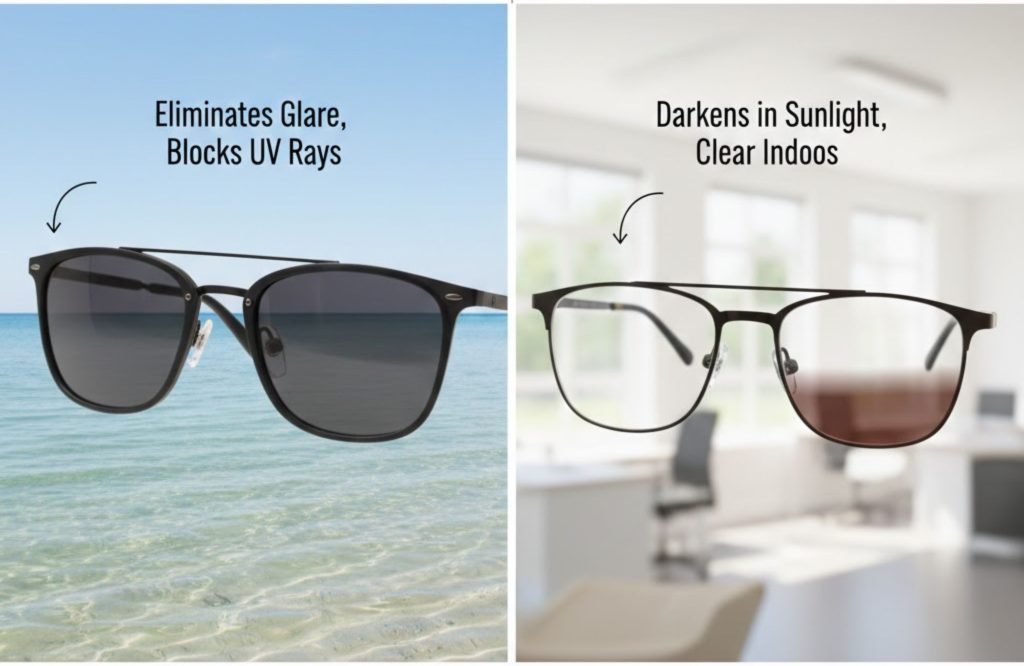
Choosing the right lenses can feel confusing, especially when comparing advanced options like polarized and photochromic technology. If you are shopping for prescription glasses or prescription sunglasses online, understanding the difference between polarized and photochromic lenses helps you choose eyewear that improves comfort, clarity, and long-term eye health. These lens types solve different vision problems related to glare, brightness, and changing light conditions.
In simple terms, polarized lenses are designed to reduce glare from reflective surfaces, while photochromic lenses automatically adjust their tint in response to light exposure. They are often compared in searches such as polarized vs photochromic lenses or photochromic vs polarized sunglasses, but one is not universally better than the other. At Speksy, customers regularly compare these lens options when selecting prescription eyewear with premium lens upgrades. With optician-backed support and detailed lens guides, Speksy helps customers choose lenses that fit how they actually use their glasses every day.
What Are Polarized Lenses?
Polarized lenses are optical lenses designed to reduce glare caused by light reflecting off flat or shiny surfaces such as water, snow, glass, and roadways. This reflected light is one of the most common causes of eye strain, reduced contrast, and visual discomfort during outdoor activities.
To understand why polarized lenses matter, think about driving on a bright day when sunlight reflects off wet pavement or the hood of your car. That reflected glare can wash out details and make it harder to see clearly. Polarized lenses filter out this reflected light before it reaches your eyes, improving visual clarity and comfort.
How Polarized Lenses Work
Polarized lenses use a special chemical filter embedded within the lens material. This filter blocks horizontally oriented light waves, which are responsible for most glare, while allowing vertically oriented light waves to pass through. Because glare from roads, water, and snow is typically horizontal, polarized lenses significantly reduce visual distortion.
It is important to understand that polarization is different from tint or UV protection. A lens can be dark without being polarized, and a polarized lens can exist in various tint levels depending on its design.
Key Benefits of Polarized Lenses
Before listing the benefits, it helps to know that polarized lenses are primarily intended for outdoor and high-glare environments rather than indoor or all-day use.
- Reduces glare from reflective surfaces like water, snow, and pavement
- Improves contrast and sharpness in bright sunlight
- Reduces eye fatigue during long periods outdoors
- Enhances visual comfort for driving, fishing, boating, and beach activities
Because of these advantages, polarized lenses are commonly chosen for prescription polarized sunglasses and outdoor eyewear. Many Speksy customers select polarized lenses when glare reduction and clarity are their top priorities.
Limitations of Polarized Lenses
Despite their benefits, polarized lenses are not ideal for every scenario. Some digital screens, LCDs, and vehicle dashboards can appear darker or distorted when viewed through polarized lenses. This can affect drivers, pilots, or professionals who rely heavily on electronic displays.
Polarized lenses also do not adapt to lighting changes. When you move indoors, they remain tinted, which makes them less suitable for all-day indoor and outdoor wear.
What Are Photochromic Lenses?
Photochromic lenses are light-sensitive lenses that automatically change tint based on UV exposure. Indoors, they remain mostly clear. When exposed to sunlight outdoors, they darken to reduce brightness and improve comfort.
These lenses are often referred to as light-adaptive lenses or transition lenses, and they are designed for people who want one pair of glasses that adjusts throughout the day without switching eyewear.
How Photochromic Lenses Work
Photochromic lenses contain molecules that react to ultraviolet light. When UV rays hit the lens, these molecules change structure, causing the lens to darken. When UV exposure decreases, such as when you go indoors, the molecules revert to their original state and the lenses gradually clear.
Most modern photochromic lenses also provide 100 percent UVA and UVB protection, even when the lens appears clear, which supports long-term eye health.
Benefits of Photochromic Lenses
Photochromic lenses are designed for convenience and versatility. They are especially useful for people who move between indoor and outdoor environments throughout the day.
- Automatically adjust to changing light conditions
- Reduce brightness outdoors without switching glasses
- Provide continuous UV protection
- Suitable for everyday prescription glasses
For many Speksy customers, photochromic lenses are a practical upgrade for daily wear, especially when combined with anti-reflective coatings that reduce indoor glare from screens and lighting.
If you want glasses that adapt from office lighting to outdoor errands, photochromic lenses are available across Speksy’s prescription eyewear collections.
Limitations of Photochromic Lenses
Photochromic lenses do not reduce glare caused by reflections. They darken based on brightness but do not filter horizontal light waves the way polarized lenses do. This means they may not be ideal for driving or water-based activities.
Another limitation is performance inside vehicles. Because most windshields block UV rays, standard photochromic lenses often do not darken fully in cars. As a result, they may not replace prescription sunglasses for frequent drivers.
Polarized vs Photochromic Lenses: Side-by-Side Comparison
Polarized and photochromic lenses serve different purposes. One focuses on glare reduction, while the other adapts to light intensity. Comparing them directly highlights how each lens type supports different visual needs.
| Feature | Polarized Lenses | Photochromic Lenses |
|---|---|---|
| Primary function | Glare reduction | Light adaptation |
| Best for | Driving, water, snow | Indoor–outdoor wear |
| Automatically changes tint | No | Yes |
| Reduces glare | Yes | No |
| Works well behind windshields | Yes | Limited |
| Indoor clarity | Tinted | Clears indoors |
This comparison explains why searches like are polarized lenses better than photochromic depend entirely on how the glasses will be used.
Which Lens Is Better for Driving?
For most drivers, polarized lenses are the better option. Sunlight reflecting off roads, vehicles, and surrounding surfaces creates glare that reduces visibility and increases eye strain. Polarized lenses address this directly by filtering reflected light.
Photochromic lenses may not darken fully inside vehicles because windshields block UV light. While they still offer UV protection, they often do not provide enough glare control for long or frequent drives.
Drivers who spend extended time on the road often prefer prescription polarized sunglasses for consistent comfort and clearer vision. Speksy offers polarized lens options across a wide range of designer sunglasses, allowing drivers to combine style with performance.
Can Lenses Be Both Polarized and Photochromic?
Yes, lenses can combine both polarized and photochromic technology, offering glare reduction and automatic light adjustment in one lens. However, these lenses are not always the best solution for every wearer.
Combined lenses tend to cost more and may still have limitations inside vehicles. Many people prefer owning two optimized pairs instead: photochromic eyeglasses for daily indoor–outdoor use and polarized sunglasses for driving and outdoor activities.
This is where optician guidance matters. Evaluating your prescription, lifestyle, and visual priorities helps determine whether a combination lens or separate pairs provide better long-term value. Speksy’s optician-supported shopping experience helps customers make that decision with confidence.
How to Choose the Right Lens for Your Lifestyle
Choosing between polarized and photochromic lenses starts with understanding how you use your glasses most days. The right lens depends on your exposure to glare, time spent outdoors, and need for convenience.
If glare from roads, water, or bright outdoor environments is your main issue, polarized lenses usually provide the best visual comfort. If you frequently transition between indoor and outdoor settings and want one versatile pair, photochromic lenses are often more practical.
Many people eventually choose both options. One pair of everyday glasses with photochromic lenses and one pair of polarized prescription sunglasses can cover most visual situations. Speksy makes this approach easier by offering consistent prescription accuracy and premium lens customization across multiple frame styles.
Why Lens Quality Matters When Buying Glasses Online
Advanced lens technology works best when paired with accurate prescriptions, high-quality materials, and proper coatings. Even the best polarized or photochromic lenses can underperform if they are poorly made or incorrectly fitted.
Quality lenses should provide clear optics, reliable UV protection, and long-term durability. Features such as anti-reflective coatings reduce reflections from screens and overhead lighting, improving comfort for digital device use.
Buying glasses online does not mean compromising on quality. With optician-backed support, clear sizing guides, and premium lens options, Speksy helps customers choose lenses that match both their prescription needs and their daily routines.
Conclusion
Understanding the difference between polarized and photochromic lenses makes it easier to choose eyewear that supports your vision and lifestyle. Polarized lenses reduce glare and enhance clarity in bright outdoor conditions, while photochromic lenses adapt to changing light for everyday convenience. Each lens type solves a different problem, and the right choice depends on how you use your glasses.
At Speksy, choosing between polarized and photochromic lenses is simple and stress-free. Every pair is authentic, built with premium lens technology, and supported by licensed opticians who help you match the right lenses to your lifestyle. Whether you need glare-reducing polarized sunglasses for driving or adaptive photochromic lenses for everyday wear, our curated collections are designed for clarity, comfort, and confidence in every light. If this is your first prescription order, use code SAVE10 at checkout.
FAQs
Is photochromic better than polarized?
Photochromic lenses are not better than polarized lenses in every situation. Photochromic lenses work well for people who want one pair of glasses that adapts to indoor and outdoor lighting. Polarized lenses are better for reducing glare during activities like driving or being near water.
What are the disadvantages of photochromic lenses?
Photochromic lenses do not reduce glare and may not darken fully inside cars because windshields block UV light. They can also take time to adjust when moving between lighting environments. For frequent driving or bright outdoor conditions, they may not replace polarized sunglasses.
What is the disadvantage of polarized sunglasses?
The main disadvantage of polarized sunglasses is reduced visibility on some digital screens and dashboards. This can affect drivers and professionals who rely on electronic displays. Polarized lenses also remain tinted indoors, which limits their versatility for all-day wear.
Can polarized lenses be photochromic?
Yes, some lenses combine polarization and photochromic features. These lenses provide glare reduction and automatic tint adjustment, but they may cost more and still have limitations in vehicles. Many people prefer separate lenses optimized for specific activities.
Posted in Eyeglasses Tips

